
Intentional laughter as a wellbeing practice

Laughter yoga, laughter therapy, unconditional laughter, active & intentional laughter. These are all different names for the same practice: harvesting the nourishing effects of hearty, joyful and sustained laughter.

The practice of laughter yoga was established in 1995 by an Indian doctor: Dr. Madan Kataria. Also, Osho taught unconditional laughter as one of the fundamentals of dynamic meditation. Gurudev teaches unconditional laughter as an essential part of his 'art of living' teachings. Sadghuru said: 'If you can't laugh, you can't meditate'.

During a laughter session, participants initiate laughter as exercise in a group setting, and through making eye contact and enacting a sense of playfulness, laughter soon becomes genuine and contagious!

All that is needed is a willingness to laugh! Laughter exercises are combined with deep yogic breathing. The breathing deepens the laughter and increases the net intake of oxygen, which boosts peak performance level and mental clarity.

1) Scott SK, Cai CQ, Billing A. Robert Provine: the critical human importance of laughter, connections and contagion. Philos Trans R Soc Lond B Biol Sci. 2022 Nov

Or are you ready to learn how to make laughter a guranteed part of your day-to-day life?

Then join the free 7-day laughter challenge

Curious about more research on the proven benefits of laughter?

Check out my blog!

'Scheduling' laughter is a concept that is still unfamiliar to a lot of people though. But just as jogging was 'weird' before the 60's, laughter yoga is rapidly gaining traction across the planet. There are laughter clubs in over 120 countries and there are 1000's of virtual and local laughter clubs!

The far spread of this practice shows us one thing: It works! But if that is not enough proof for you, then trust science! Research has shown that laughter is one of the most contagious emotional expression in the human spectrum (1). When we hear laughter, our natural instinct is to join in!

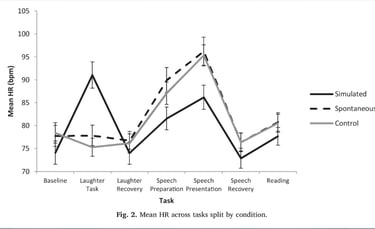
Intentional laughter has also proven to improve serotonin, oxytocin, and dopamine levels. While also reducing cortisol levels (2). It has also been shown to significantly reduce depression (3) and make people more resilient to stress (4).

2) Yim, J. (2016). Therapeutic benefits of laughter in mental health: A theoretical review. The Tohoku Journal of Experimental Medicine, 239(3), 243–249. doi.org

3) Zhao, J., Yin, H., Zhang, G., Li, G., Meng, H., & Chen, Y. (2019). The effects of laughter therapy on anxiety and depression in the elderly: A systematic review and meta-analysis. Journal of Affective Disorders, 256, 622–632. doi.org

4) Zander-Schellenberg, T., Collins, I. M., Miché, M., Imboden, C., Roth, W. T., Brühl, A. B., Meyer, A. H., & Meinlschmidt, G. (2020). Does laughing have a stress-buffering effect in daily life? An intensive longitudinal study. PLOS ONE, 15(7), e0235851. doi.org [1]

Citations